[1] Laboratoire Plasticité du Cerveau LPC, ESPCI Paris – PSL / CNRS
When learning makes the Brain Hungry

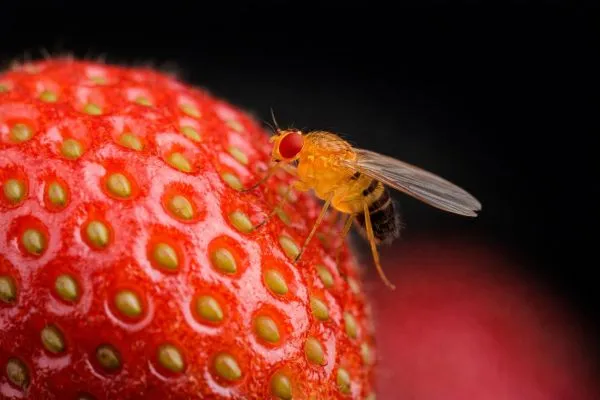
It was once thought that hunger was governed primarily by the body’s needs. A recent study published in Nature shows that it can also be modulated, independently, by mental activity. In the fruit fly Drosophila melanogaster, researchers [1] have revealed that aversive learning—unrelated to food—can reactivate a sugar sensor in the brain that is normally dormant in a sated animal. This brief “false hunger” then helps consolidate long-term memory.
The study focuses on neurons sensitive to fructose, a sugar produced after the ingestion of carbohydrates. Under normal conditions, these neurons promote food intake when the animal is fasting. In a well-fed fly, however, they are inhibited. However, the researchers show that after several learning sessions spaced out over time—a classic condition for forming a lasting memory—this inhibition is temporarily lifted. In other words, the brain behaves as if it were lacking energy, even though the animal is not hungry.
This shift is not merely a side effect. It appears to be necessary for memory consolidation. After learning, sugar intake reactivates these “re-activated” neurons and triggers the release of a glycoprotein hormone, thyrostimulin, which acts on memory circuits. When deprived of food at the right time, the flies form their long-term memories less effectively. Conversely, artificially reactivating these neurons is enough to restore this consolidation. The image speaks for itself: to engrave a memory, the brain momentarily turns on a metabolic “light,” as if it were simulating a need to launch the correct biological program.
The significance of this finding is twofold. On the one hand, it sheds new light on the link between nutrition, motivation, and memory. On the other hand, it shows that an internal signal usually associated with energy balance can be repurposed to serve a cognitive function. The authors thus refer to a non-homeostatic mechanism of hunger, similar to an “interoceptive decoy”: the perception of the body’s internal state is briefly reconfigured to optimize learning.
These results were obtained in fruit flies and therefore do not directly apply to the human brain. However, they highlight a general principle: the circuits that monitor available energy are not only used to regulate appetite. They may also play a role in determining what the brain deems worth retaining in memory.
Notes
References
Francés, R., Comyn, T., Desnous, C. et al. Aversive learning hijacks a brain sugar sensor to consolidate memory. Nature (2026).
https://doi.org/10.1038/s41586-026-10306-z
Key information
 Published on 16/04/2026
 Research
 Coauteur de l’étude : Pierre-Yves Plaçais, pierre-yves.placais@espci.fr
 Paul Turpault, paul.turpault@espci.fr