ESPCI Laboratories
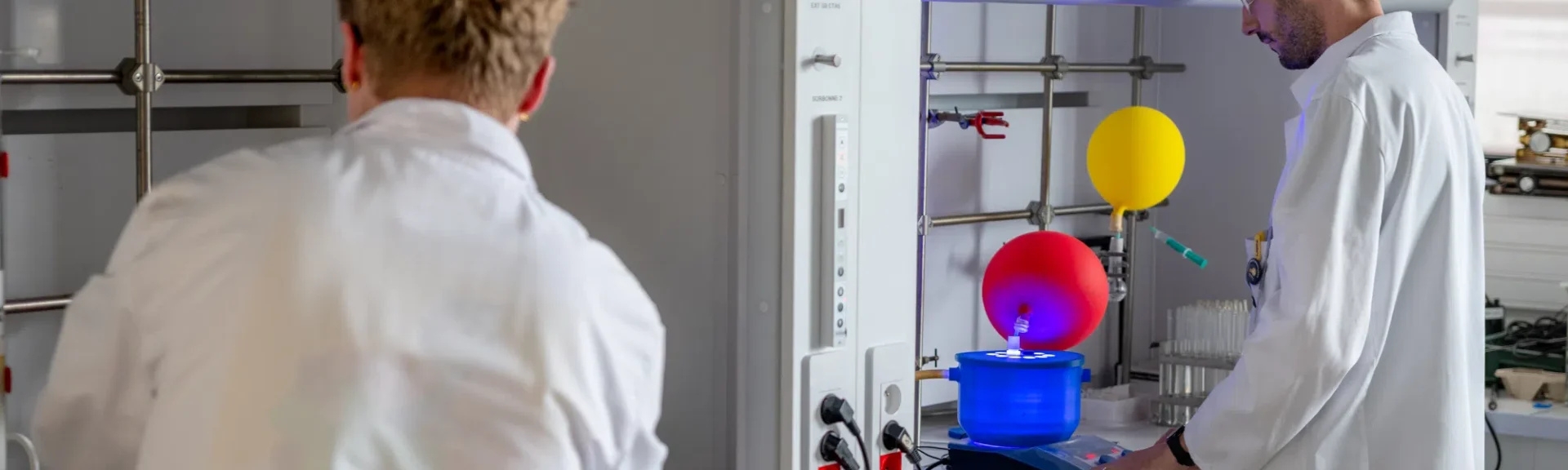
At ESPCI Paris – PSL, research is organized into ten joint research units affiliated with the CNRS or Inserm, supplemented by two support units. Physics, chemistry, and biology converge here around a shared experimental culture: understanding phenomena, designing the instruments needed to observe them, and developing new methods, technologies, and applications.

The Ten Joint Research Units
Biological Mass Spectrometry and Proteomics — SMBP
UAR 2051
The SMBP laboratory develops and applies mass spectrometry methods to the study of complex biological systems. Specializing in proteomics and the detailed analysis of biomolecules—including proteins, peptides, and metabolites—it designs innovative approaches to characterize post-translational modifications, molecular interactions, and protein dynamics.
The laboratory relies on a high-resolution mass spectrometry technology platform equipped with state-of-the-art instrumentation. It is strongly involved in collaborative projects at the interface of biology, analytical chemistry, and instrumentation, with a strong commitment to both training and applied research.
Molecular, Macromolecular, and Materials Chemistry — C3M
UMR 7167
The C3M laboratory designs, synthesizes, and studies new molecules and materials. Its research focuses in particular on catalysis, sustainable chemistry, recyclable or self-healing materials, and reactive shaping processes.
Chemistry, Biology, and Innovation — CBI
UMR 8231
The CBI laboratory brings together expertise at the intersection of chemistry and experimental biology. Its teams conduct research in biochemistry, genetics, biophysics, analytical sciences, microfluidics, and physical chemistry, as well as on innovative materials for energy.
Gulliver
UMR 7083
The Gulliver Laboratory conducts theoretical and experimental research on soft matter, interfaces, and non-equilibrium systems. Its work focuses in particular on active matter, self-organization, and statistical physics.
Paris Institute of Porous Materials — IMAP
UMR 8004
IMAP is developing new crystalline porous hybrid materials. Their properties open up new possibilities for the separation, storage, and transformation of molecules in the fields of the environment, energy, and health.
Langevin Institute “Waves and Images”
UMR 7587
The Langevin Institute studies the propagation and control of waves in complex environments. Its research covers acoustics, optics, imaging, materials, and information processing.
Physics and Materials Science — LPEM
UMR 8213
The LPEM develops and studies new materials and quantum nanostructures. Its research focuses in particular on superconductivity, correlated electronic systems, photonics, photovoltaics, and microwave electronics.
Brain Plasticity — LPC
UMR 8249
The Brain Plasticity Laboratory studies the mechanisms by which the brain adapts in response to experience and changes in the environment. It also analyzes how these mechanisms are disrupted in various neurological and psychiatric disorders.
Physics for Medicine — PhysMed
UMR 8063 – Inserm U1273
PhysMed transforms concepts from physics into biomedical technologies. The laboratory develops new noninvasive imaging and therapeutic methods for the diagnosis and treatment of various diseases.
Physics and Mechanics of Heterogeneous Media — PMMH
UMR 7636
The PMMH conducts research in hydrodynamics, physical mechanics, soft matter, interfaces, biophysics, and statistical physics. Its research teams combine experiments, theory, and numerical simulation.
Soft Matter Science and Engineering — SIMM
UMR 7615
The SIMM laboratory studies the properties of soft matter and fluids by combining materials chemistry, physics, and mechanics. Its research focuses in particular on polymers, colloids, liquids, and their interfaces.
