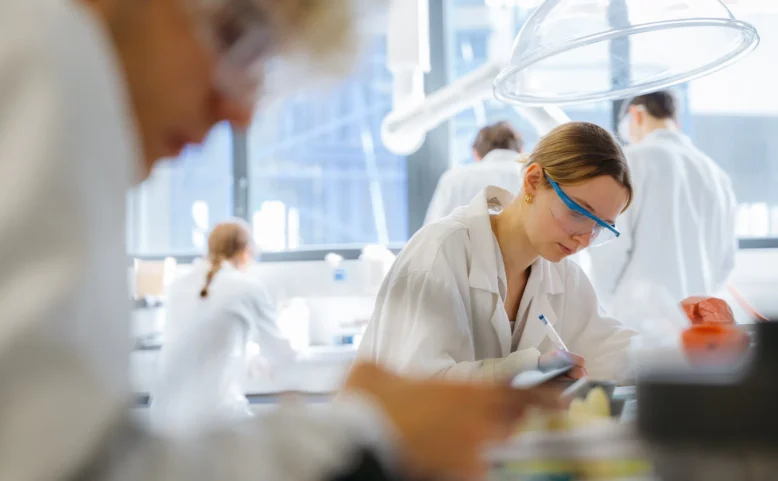
Education
ESPCI Paris – PSL offers a multidisciplinary education in physics, chemistry, and biology, based on the interplay between disciplines, methods, and experimental tools to understand, analyze, and design complex systems, materials, and innovative technologies. In 2025, the school ranked third among engineering schools in rankings such as *L'Étudiant* and *L'Usine Nouvelle*, and often ranked first in research.

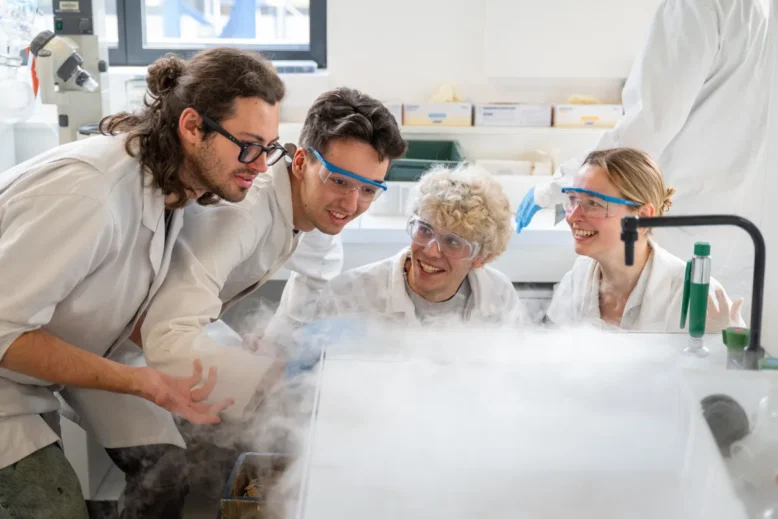
An engineering school specializing in physics, chemistry, and biology with a strong focus on research
Becoming an ESPCI engineer involves much more than simply acquiring a solid foundation in science: it means learning to model, experiment, measure, and interpret data in order to take action in complex environments.
At ESPCI, research is at the heart of the curriculum. Hands-on work, experimental projects, and collaboration with research labs immerse you in a high-level scientific environment from your very first years.
As part of PSL University and located in the heart of Paris, the school fosters collaboration, interdisciplinary work, and bridges between basic research and innovation.
Science programs aligned with research themes
As an engineering school and research center, ESPCI provides you with an education that keeps pace with the latest scientific advances in physics, chemistry, and biology, closely integrating theory and experimentation.
Aligned with the school’s research themes, the programs are based on a common methodology: modeling, experimentation, measurement, and interpretation. Taught by faculty members from ESPCI’s laboratories, you’ll develop a comprehensive scientific approach at the intersection of research, experimentation, and innovation.
The engineering program: an in-depth scientific education
The engineering program is structured as a three-year course of study, which may be extended to a fourth year. Depending on each student’s academic path, this additional year may allow them to delve deeper into a scientific specialization, enter a master’s program, pursue additional training—particularly in management, political science, or innovation—or pursue a dual degree.
ESPCI’s graduating classes are intentionally kept small (90 engineering students) to foster close relationships with faculty and ensure access to experimental resources.
Master’s Degree Search
ESPCI Paris offers master’s programs jointly accredited with academic partners within PSL University. The programs cover a wide range of fields, from chemistry to fundamental physics, from energy to materials, and even biomedical engineering and quantum engineering.
The master’s programs in which ESPCI participates cover several major scientific fields related to its areas of expertise: chemistry, physics, materials science, life sciences, biomedical engineering, and quantum engineering.
Specialized Master’s Programs
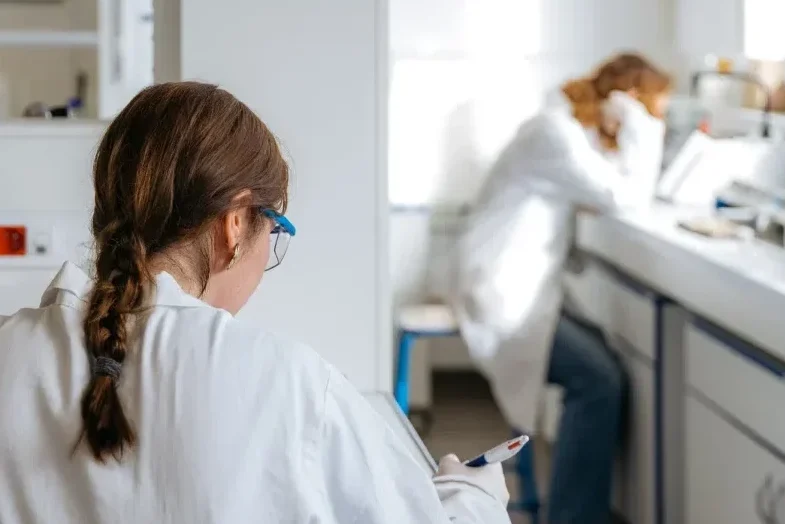
Specialized master’s programs are post-degree programs open to students who have completed five years of higher education and are accredited by the Conférence des grandes écoles. Building on the School’s scientific excellence and its ties to the industrial and academic worlds, these programs enable students to develop in-depth professional expertise in a specific field.
The ACTION Master’s Program (Life Cycle Assessment & Decarbonization Pathways) trains students to conduct life cycle assessments (LCA) that integrate environmental, economic, and social factors, and to develop greenhouse gas emission reduction pathways in an industrial context.
Continuing Education
At ESPCI, you can enhance your scientific skills through our continuing education modules, which are designed to be immediately applicable to your professional practice.
Developed by our research teams, these modules combine theory, practice, and innovation to offer you a hands-on and stimulating learning experience. You’ll have the opportunity to explore cutting-edge topics such as decarbonization and life cycle assessment, fluids and soft matter, electrochemistry, and artificial intelligence applied to chemistry.
Doctoral Studies
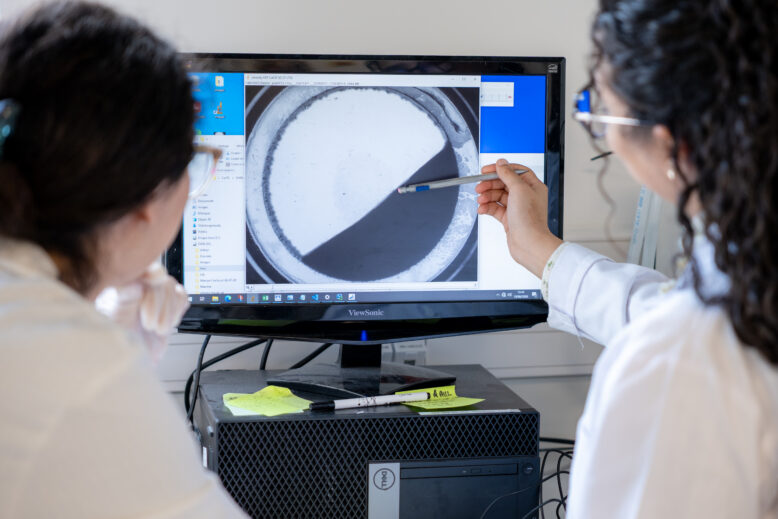
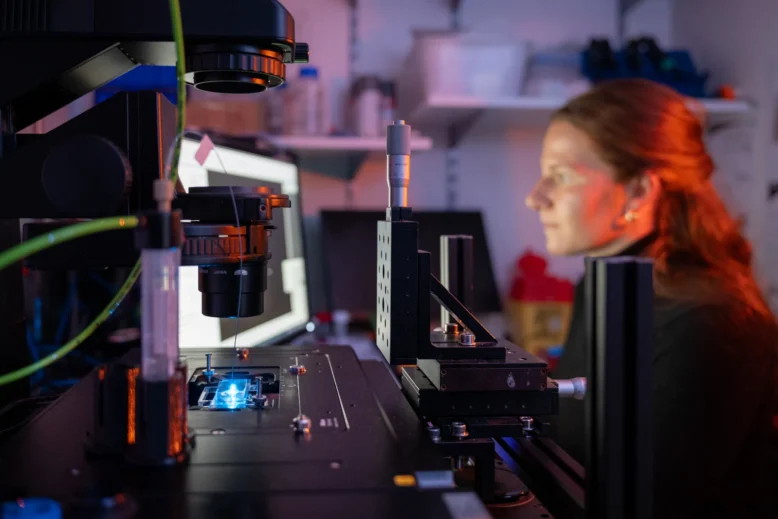
The doctoral program draws on ESPCI’s 10 research units in physics, chemistry, and biology. It aims to train doctoral candidates for careers in research and innovation, whether in industry or academia.
Each year, the school welcomes about 60 new doctoral students, who are primarily distributed among twelve partner doctoral schools. A significant portion of the dissertations are also carried out in collaboration with industry.