
Mission and Values
ESPCI Paris - PSL has a clear mission: to make an impact on society through transdisciplinary research and education grounded in experimentation, with the goal of creating a more responsible, sustainable, and inclusive world. The school structures this vision around its three closely linked missions: teaching, research, and innovation.

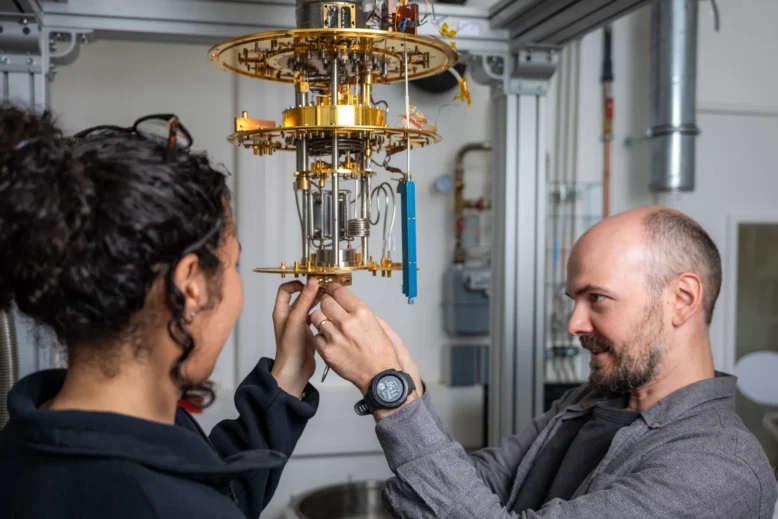
A vision focused on impact
The school advocates a transdisciplinary approach at the intersection of physics, chemistry, and biology, in which experimentation plays a central role. This scientific culture closely links research advances, the education of engineering students, and responses to major contemporary challenges, with a view to benefiting society.
Our goal: to train responsible professionals capable of innovating
ESPCI aims to train research engineers and scientists who are mindful of their individual, social, and environmental responsibilities. This ambition is reflected in an educational program that transcends disciplinary boundaries and is closely linked to the dynamics of research.
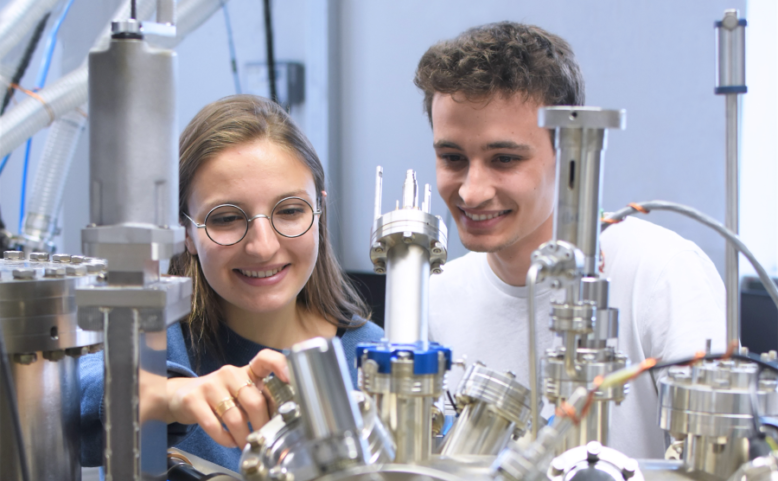
Three inseparable missions: education, research, and innovation
Training
The school offers a transdisciplinary curriculum in physics, chemistry, and biology that keeps pace with the latest scientific advances, combining theoretical learning with hands-on laboratory work. This educational approach prepares engineering students to tackle complex problems, equipping them with a solid foundation in experimental methods.
Search
A renowned research center in physics, chemistry, and biology, ESPCI operates through laboratories established as joint units with the CNRS, INSERM, and/or Sorbonne University. The research conducted advances fundamental knowledge and paves the way for applications that benefit society.
Innovation
Through its interdisciplinary approach, the school promotes technology transfer and the emergence of innovations stemming from research. In particular, ESPCI’s deep tech incubator supports projects aimed at creating and developing startups.
Explicit Commitments to Serve Society
Since its founding, the school has emphasized the role of science in serving society and has been actively engaged in addressing major issues: the environment, solidarity, health, and access to and openness to knowledge. It also advocates for equal opportunity and social diversity, and promotes civic engagement, particularly through community organizations.
Some examples of commitments:
- Promoting gender equality and inclusivity in science: an annual science camp for high school girls (24 participants). The program includes: hands-on lab experiences, workshops, practical experiments, and discussions with researchers and engineering students.
- Accelerating innovation stemming from research through the development of the PC’UP deep tech incubator: supporting scientific projects from technological maturation to the creation of startups.
- Ensuring the long-term sustainability of the ecological transition: commitment to obtaining the DD&RS certification. This certification recognizes and evaluates a higher education institution’s comprehensive approach to sustainable development and social responsibility.
- Ensuring scientific rigor and informing strategy: leading an International Scientific Council (ISC) composed of 10 leading international scientists. Their mission: to conduct an annual review of the school’s activities and formulate strategic recommendations. The CSI is chaired by Steven Chu (1997 Nobel Prize in Physics).

To make an impact on society through transdisciplinary research and education grounded in experimentation.
General Director of ESPCI Paris – PSL