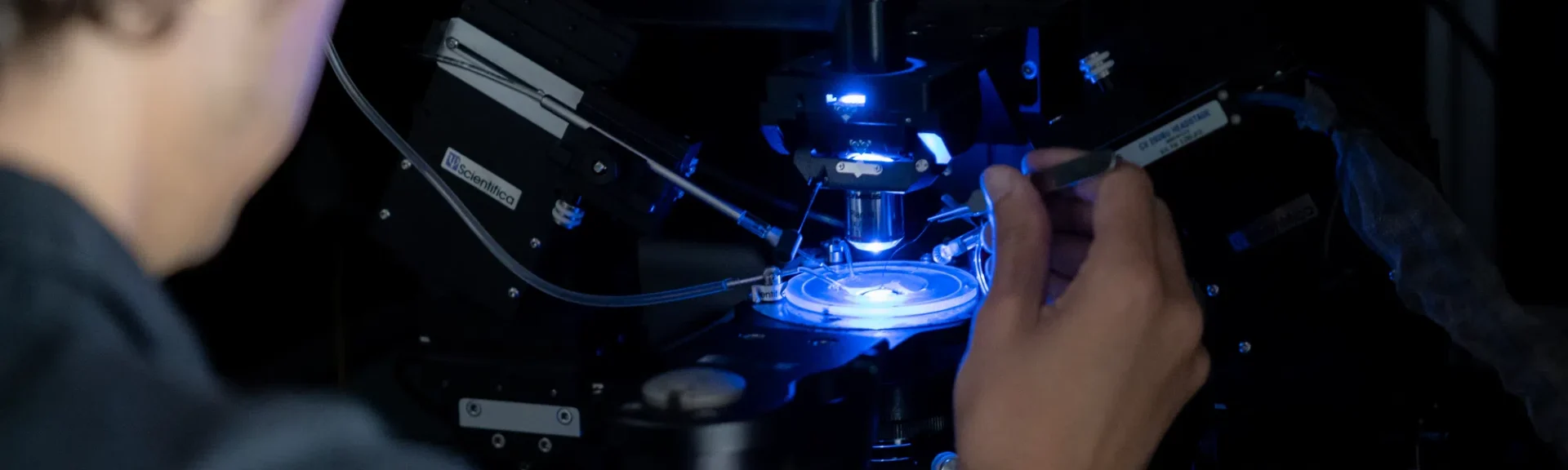
Basic, experimental, and interdisciplinary research
Research
At ESPCI Paris – PSL, physics, chemistry, biology, and engineering come together to explore phenomena that span disciplines—from the organization of matter to the dynamics of living systems, and from wave propagation to the behavior of complex systems. Research teams design the experiments, instruments, and models necessary for these studies. This experimental approach advances fundamental knowledge while paving the way for new methods, technologies, and applications. It thus helps address major societal challenges, particularly in the fields of health and the ecological and energy transitions.


I believe in the continuity of the research chain, from basic research to application, and in the inspiration that flows in both directions along that chain.
Emmanuelle Gouillart
General Director of ESPCI Paris – PSL
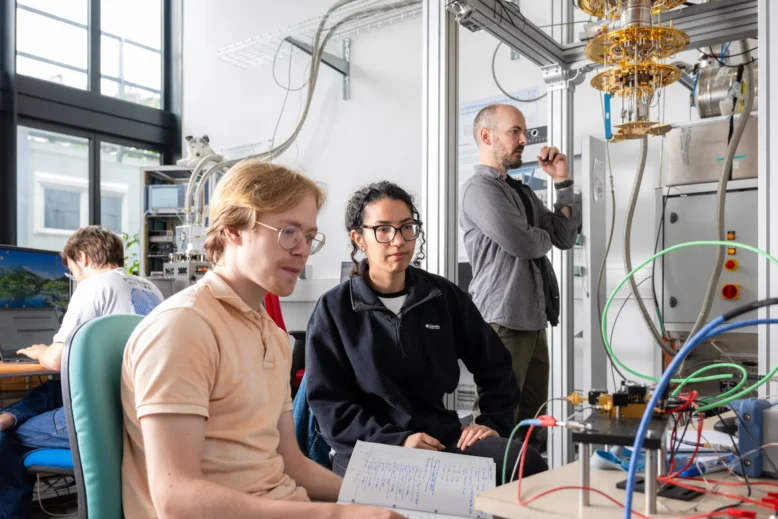
Experimentation at the Heart of Research
At ESPCI, research is based on a rigorous and innovative approach to experimentation. To observe, measure, or uncover a phenomenon, the research teams design the molecules, materials, instruments, protocols, and devices they need themselves.
Experiments are not just for testing hypotheses. They allow us to ask new questions, develop innovative methods, and, at times, give rise to new technologies.
Bringing Together Different Disciplines to Address Complex Problems
Each laboratory contributes its own expertise, but projects often combine multiple scientific approaches. Chemistry, physics, biology, microfabrication, imaging, and modeling are thus combined to understand complex phenomena and develop solutions that no single discipline could produce on its own.
Some research topics covered at the school
Molecules, Materials, and Properties
This research focuses in particular on catalysis, functional materials, recyclable polymers, gels and elastomers, self-assembled materials, semiconductors, photonics, superconductivity, and the capture and conversion of molecules such as CO₂.
The teams design and study molecules, polymers, colloids, nanomaterials, porous solids, and quantum materials. They seek to understand how their composition, architecture, and structure determine their properties.
They combine synthesis, formulation, structural characterization, spectroscopy, microscopy, and mechanical, optical, electronic, or thermal measurements.
Fluids, Interfaces, and Non-Equilibrium Systems
Complex liquids, foams, emulsions, suspensions, granular materials, membranes, and biological tissues exhibit collective behaviors that cannot always be deduced from their individual constituents alone.
The teams study fluid flow, wetting, capillarity, adhesion, friction, fracture, instabilities, and the interactions between fluids and structures. They also focus on active matter: bacteria, cells, droplets, or particles capable of moving and organizing themselves spontaneously.
This research links the microscopic scale to the properties observed at the scale of a material, an organism, or an environment.
Waves, Images, and Information
Research on acoustic, optical, electromagnetic, and elastic waves aims to understand their propagation and to control their interactions with complex, disordered, or scattering media.
Research teams are developing new ways to focus a wave, detect a signal, or reconstruct an image when the information is distorted or difficult to access. This work draws on wave physics, instrument design, signal processing, inverse problems, and numerical modeling.
These technologies have applications in medical imaging and therapy, microscopy, telecommunications, seismology, and non-destructive testing of materials.
Cells, Organisms, and the Brain
Research on living organisms ranges from biomolecules to cells, from microorganisms to tissues, and from neural networks to behavior.
In particular, the research teams study the organization of the cytoskeleton, cell shape and division, experimental evolution, bacterial communities, the mechanisms of memory, sleep, brain plasticity, and certain neurological disorders.
They combine biochemistry, molecular biology, genetics, biophysics, proteomics, microfluidics, imaging, electrophysiology, and behavioral analysis. Biological systems thus become not only subjects of observation but also sources of new concepts for physics, chemistry, and engineering.
A constant back-and-forth between research and applications
Basic research gives rise to new methods, materials, processes, and devices. In turn, the needs of the field—whether in healthcare, industry, or the ecological transition—give rise to new scientific questions and guide experimental work.
Collaborations with companies expose teams to real-world constraints, open up new fields of study, and enhance the relevance of research. In particular, they help develop solutions for CO₂ capture and utilization, polymer recycling, energy materials, and resource-efficient processes.
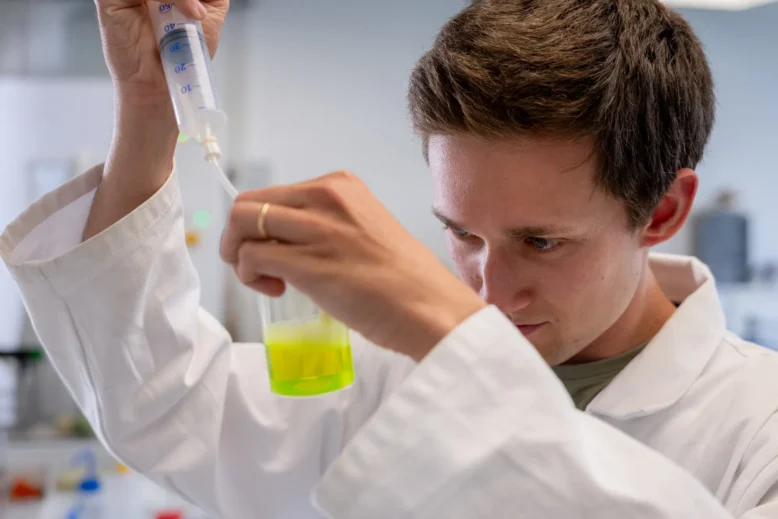
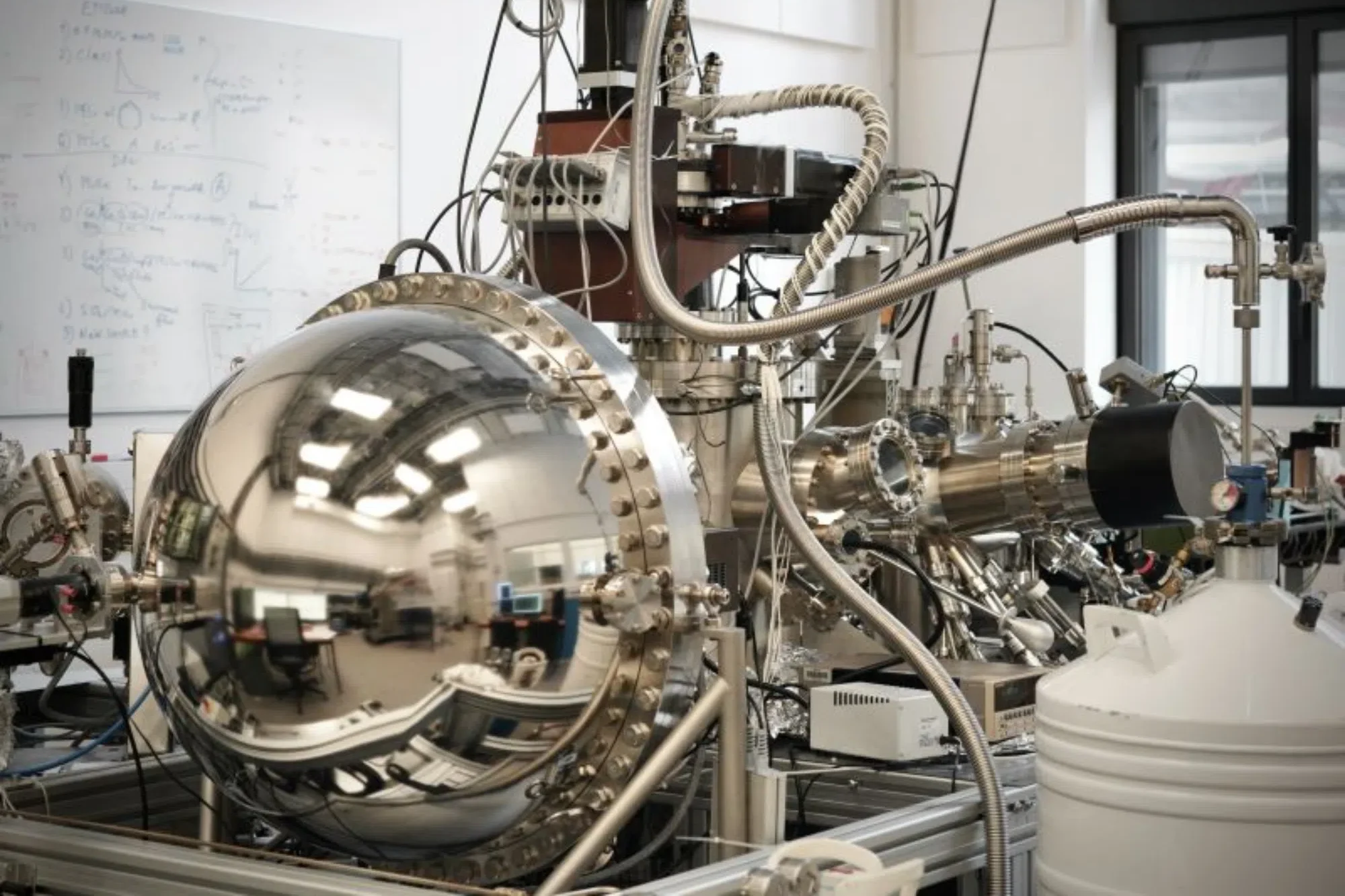
State-of-the-art instrumentation, available to the scientific community
Research at ESPCI draws on advanced equipment and recognized expertise in microscopy, nanotechnology, microfluidics, mass spectrometry, proteomics, mechanics, and prototyping.
Organized into platforms, these resources support the design of experiments and the development of innovative methods. Depending on the project, they are also made available to academic, hospital, and industrial communities to foster collaboration and widely disseminate these analytical and manufacturing capabilities.
Ten research units, a single scientific environment
Research is conducted in ten joint research units affiliated with the CNRS or Inserm, covering a broad spectrum of disciplines, from chemistry and physics to biology, neuroscience, and health technologies.
Laboratories, platforms, and support units pool their advanced equipment and expertise. They develop interdisciplinary projects with academic, hospital, and industrial partners, both in France and internationally.
This environment also welcomes engineering students, master’s students, doctoral candidates, and postdoctoral researchers.
