
Master's Programs
The master’s programs offered in collaboration with ESPCI Paris – PSL allow students to delve deeper into a scientific specialty through direct involvement in research. They cover a wide range of disciplines: physics, chemistry, life sciences, materials science, energy, health, instrumentation, and quantum engineering. Offered in collaboration with other institutions within PSL University and academic partners, these master’s programs combine high-level instruction, scientific projects, and gradual immersion in laboratory work.


Specialized Science Programs
Research master’s programs allow students to acquire in-depth scientific expertise and specialize at the five-year post-secondary level, with a view to pursuing a Ph.D. or a career in research, R&D, or innovation.
Run in collaboration with other PSL institutions and academic partners, these programs draw on the expertise of research teams and state-of-the-art scientific equipment. Admission requirements vary by program.
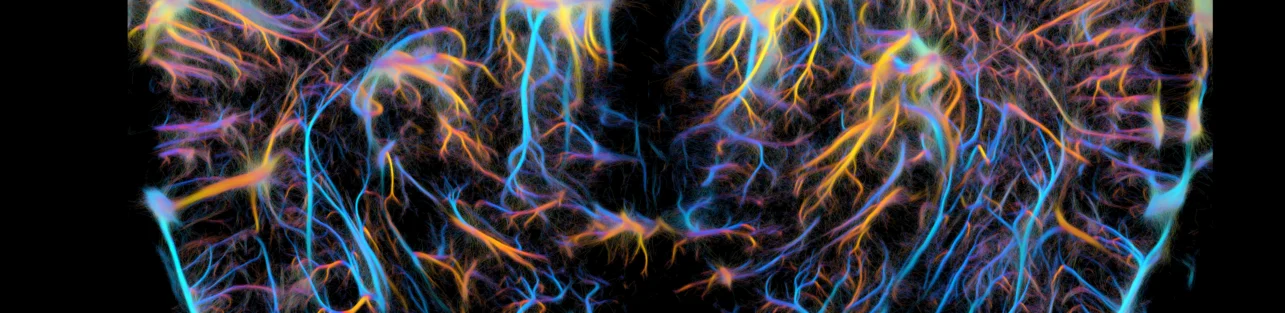
Master ST4Health: Innovating for Health
The Master’s in Science & Technology for Health (ST4Health) is PSL’s graduate program in health engineering. This two-year program offers international, interdisciplinary, research-based training at the intersection of biomedical sciences and engineering.
Research Master’s Programs
Master in Integrative Chemistry & Innovation
The Master’s programme in Integrative Chemistry & Innovation offers an interdisciplinary approach to chemistry, bringing together materials science, life sciences, experimental methods and innovation. It draws on a network of partner institutions, laboratories and research institutes within PSL.
Master's in Chemistry
The Master’s programme in Chemistry offers advanced training covering molecular chemistry, materials chemistry, analytical chemistry, physical and theoretical chemistry, life sciences, and chemical engineering.
The various specialisation tracks enable students to develop expertise closely aligned with the research areas pursued by partner laboratories.
Master's in Physics
The Master’s programme in Physics offers theoretical and experimental training across a wide range of fields, including statistical physics, condensed matter physics, atomic physics, high-energy physics, astrophysics, and physics applied to life sciences.
The programme places strong emphasis on experimental methods, modelling, and the analysis of complex physical phenomena.
Education Through Research
The master’s programs affiliated with ESPCI are closely linked to research laboratories and practices. Supervised projects, experimentation, modeling, and critical analysis play a central role in these programs.
Courses are taught by active researchers, and internships can be completed in academic laboratories or R&D teams. This environment fosters interdisciplinary collaboration and provides access to state-of-the-art equipment.

A scientific community in the heart of Paris
Located in the heart of Paris, ESPCI is part of a scientific community that brings together institutions of higher education, laboratories, and research organizations.
The joint accreditation of master’s programs within PSL fosters interdisciplinary collaboration and provides access to high-quality instruction and facilities.
Continue on to a Ph.D. program
Upon completion of the master’s program, students may continue on to a doctoral program to explore a scientific topic in greater depth and contribute to the development of new knowledge.
The thesis topics offered in the laboratories affiliated with ESPCI include physics, chemistry, biology, materials science, energy, health, and instrumentation.
A doctoral degree can be pursued in an academic laboratory or through a partnership with a company, particularly through the industrial research training agreements program.
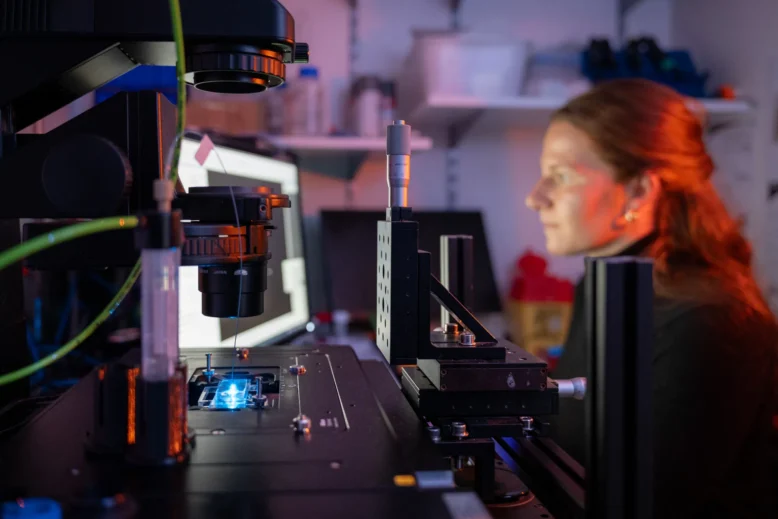
Job Opportunities and Careers
Research master’s programs prepare students for scientific roles in public laboratories, universities, research organizations, private research centers, and corporate research and development teams.
Depending on their field of study and career goals, graduates can pursue careers in academic research, research and development, scientific engineering, instrumentation, materials science, energy, healthcare, life sciences, quantum technologies, or innovation.