Ultrasound therapies: a promising breakthrough in the fight against degenerative diseases.

Researchers [1] have demonstrated a major breakthrough in the use of ultrasound for biological modulation. Their study reveals that the acoustic pressure generated by low-intensity ultrasound activates the mechanosensitive Ret receptor in mouse colon cells.
The team used quantitative measurements and acoustic simulations to analyze the influence of various physical mechanisms, such as acoustic compression and shear stresses, on the activation of the Ret receptor. The results show that this receptor activation is non-thermal, dependent on acoustic pressure, and independent of shear stress or heat.
This discovery offers promising prospects for regenerative medicine, with the potential to stimulate cell proliferation and regeneration in a controlled manner. The implications are far-reaching, ranging from the treatment of degenerative diseases to the improvement of therapies for inflammatory conditions such as inflammatory bowel disease.
Notably, these effects are observed at sound intensities close to the safety limits for medical ultrasound. This work underscores the importance of maintaining these standards while exploring new therapeutic applications of ultrasound.
The study also highlights the ability of ultrasound to activate cell proliferation markers such as Ki67 and Lgr5 following prolonged stimulation, paving the way for innovations in tissue regeneration and targeted cell therapies.
Notes
[1] de l’institut de Physique pour la Médecine Paris (Inserm, ESPCI Paris – PSL, CNRS) et de l’institut Curie (Sorbonne Université, CNRS).
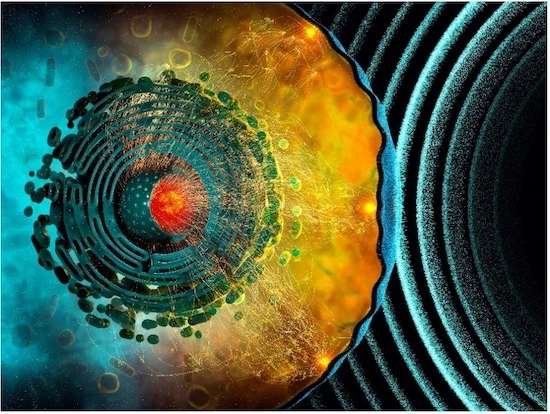
Image: Low-intensity acoustic waves activate the mechanosensitive receptor ret
References
Zamfirov L, Nguyen N-M, Fernandez-Sanches ME, Cambronera Ghiglione P, Teston E, Dizeux A, Tiennot T, Farge E, Demené C, Tanter M. Acoustic-pressure-driven ultrasonic activation of the mechanosensitive receptor Ret and of cell proliferation in colonic tissue. Nature Biomedical Engineering. 2024.
https://doi.org/10.1038/s41551-024-01300-9
 Published on 09/01/2025
 Research
 Les auteurs de l’étude efarge@curie.fr, charlie.demene@espci.fr, ou mickael.tanter@espci.fr.