A new ultrasound-based therapeutic approach for treatment-resistant depression

Major depressive episodes are the most common mental health disorder worldwide. One in five people will suffer from depression at some point in their lives, and the risk of suicide accounts for several thousand deaths each year in France. A new study published in the journal Brain Stimulation and conducted by researchers from GHU Paris, Inserm, the CNRS, Université Paris Cité, and ESPCI Paris-PSL reveals promising results from a five-day treatment regimen using low-intensity focused ultrasound to modulate activity in deep brain regions involved in depression.
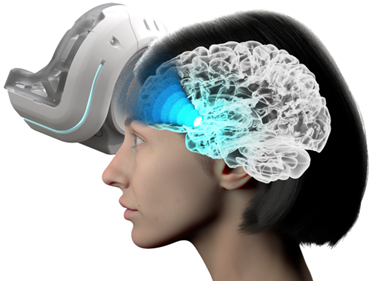
© Alexandre Dizeux
In 2021, a health survey conducted by Santé publique France revealed that 12.5% of people aged 18 to 85 had experienced a major depressive episode during the previous year [1]. Despite advances in the pharmacological treatment of depression, the therapeutic effects of antidepressants take several weeks to take effect, and about one-third of patients do not respond adequately to these medications [2].
It is therefore essential to develop new therapeutic approaches that offer faster relief. One strategy for treating treatment-resistant depression is to stimulate the deep brain regions involved in this disorder, such as the subcortical cingulate region, but until now, this has only been possible through the implantation of intracerebral electrodes, an invasive procedure associated with significant neurosurgical risk, limiting its availability to a small number of patients.
A new study involving researchers and physicians from GHU Paris, Inserm, the CNRS, Université Paris Cité, and ESPCI Paris-PSL, published in the journal Brain Stimulation, shows promising results from a five-day treatment regimen using low-intensity focused ultrasound. This innovative technology makes it possible to modulate the activity of deep brain regions involved in depression, but this time in a non-invasive manner. Ultrasound waves travel through human tissue and, through mechanical action, remotely stimulate the brain area on which they are focused by triggering the opening of mechanosensitive channels. However, the uneven thickness of the skull, which deflects the ultrasound waves and limits the ability to focus them precisely on the target area, had hindered the development of this technology for several decades. At the GHU Paris Sainte-Anne site, psychiatrists and researchers Marion Plaze and David Attali, working in Dr. Thierry Gallarda’s department, participated in the development and implementation of an innovative portable device based on the use of acoustic lenses that focus ultrasound waves with unprecedented precision. These lenses compensate for distortions in the ultrasound waves caused by their passage through the skull. In fact, the researchers were able to model the effect of the skull on ultrasound waves and determine the optimal shape of these acoustic lenses, which are uniquely manufactured and customized for each patient. The lens technology was developed at the Institute of Physics for Medicine (Inserm, ESPCI Paris – PSL, CNRS) by researchers and engineers Jean-François Aubry (CNRS), Thomas Tiennot (ESPCI), and Mickael Tanter (Inserm), co-authors of the study, who patented the technology and co-founded the startup SonoMind with Jeremy Bercoff, president, and Philippe Chapuis, chief technical officer, with the goal of accelerating the clinical translation of this technology.
The precision transcranial ultrasound stimulation thus achieved represents a major technological advance in the fields of personalized medicine and neuroscience. For the first time, it enables targeted, precise, and non-invasive stimulation of deep brain structures, such as the subcortical cingulate region, using a portable device.
The clinical trial consisted of 5 consecutive days of ultrasound treatment of this brain region. This protocol was conducted on 5 patients suffering from severe, treatment-resistant depression with the aim of testing the safety of this new approach. The results are encouraging, with no serious adverse events and excellent tolerability: patients reported feeling no discomfort or pain during the sessions. Furthermore, depression severity scores gradually decreased over the course of the treatment days, with an average reduction of more than 60% in depression severity by the fifth day of the protocol. “Although the results are encouraging, they should be interpreted with caution, as this is an initial safety study involving a limited number of patients and without a placebo group,” the researchers note.
Further studies are needed, and are already planned, involving larger cohorts of patients. If the rapid and marked therapeutic effects are confirmed, along with the technique’s safety profile and the long-term persistence of these effects, transcranial ultrasound stimulation could see its applications multiply in the coming years and expand into psychiatry, addiction medicine, and neurology, benefiting many patients.
This work is the culmination of 25 years of research on methods for focusing ultrasound through the skull, 15 years on modulating brain activity using ultrasound, and 7 years of collaboration between psychiatrists, researchers at the GHU Paris and the Paris Institute of Psychiatry and Neurosciences (Inserm/Université Paris Cité), and researchers at the Institute of Physics for Medicine (CNRS/ESPCI Paris-PSL/Inserm).
The research has received ongoing support from Inserm, the CNRS, and ESPCI Paris-PSL, the GHU Paris and Université Paris Cité, as well as financial support from the Bettencourt Schueller Foundation, the National Research Agency, and innovative funding from Inserm (Neurotechnologies Impulse Program and Ultrasound Technology Research Accelerator). The clinical trial received financial support from the Focused Ultrasound Foundation (Charlottesville, VA, USA).
Download the press release in PDF format
Notes
[1] Prévalence des épisodes dépressifs en France chez les 18-85 ans : résultats du Baromètre santé 2021
[2] Rush et al, American Journal of Psychiatry, 2006
References
Deep transcranial ultrasound stimulation using personalized acoustic metamaterials improves treatment-resistant depression in humans, Attali, David et al. Brain Stimulation : Basic, Translational, and Clinical Research in Neuromodulation, 2025.
 Published on 05/05/2025
 Research
 Jean-François Aubry, Directeur de recherche au CNRS : jean-francois.aubry@espci.fr Marion Plaze, Docteur en psychiatrie et chercheuse au GHU paris : m.plaze@ghu-paris.fr David Attali, Docteur en psychiatrie et chercheur au GHU Paris : d.attali@ghu-paris.fr
 SPCI Paris - PSL communication@espci.fr CNRS presse@cnrs.fr GHU Paris, site Sainte-Anne communication@ghu-paris.fr