ESPCI must be a school of transition

Interview with Emmanuelle Gouillart, the new Executive Director of ESPCI Paris – PSL
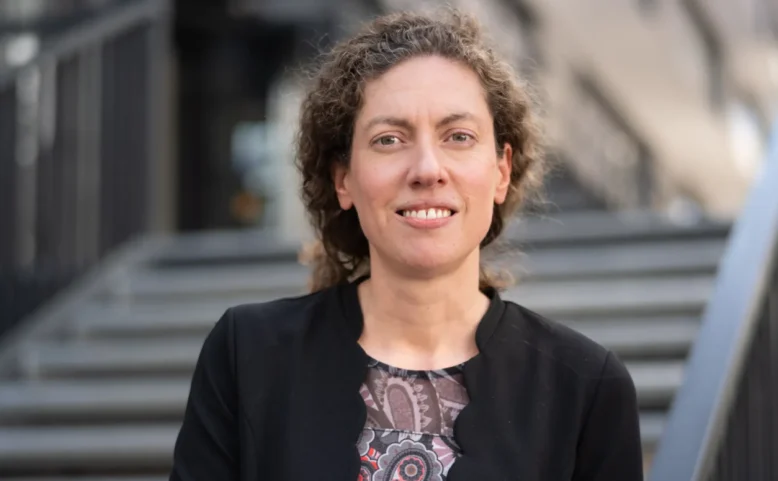
Emmanuelle Gouillart officially took office as Executive Director of ESPCI Paris – PSL on June 26, 2026. A physicist by training and a recognized expert on the intersection of academic and industrial research, she succeeds Vincent Croquette for a five-year, renewable term.
She reflects on her career path, the reasons that led her to join ESPCI, and the key priorities she hopes to advance at the school: openness, research-based education, support for scientific teams, inclusion, and transitions.
A career at the intersection of research and industry
What was your background before joining ESPCI?
I am a physicist by training, and my career path has gradually shifted toward materials science and inorganic chemistry. I completed my studies at the ENS, as part of the PSL network.
What truly defines my career path is that I have always worked at the intersection of academic and industrial research. It’s a common thread that runs through everything I’ve done.
It all began with a CIFRE thesis, conducted jointly at Imperial College London and the CEA in Saclay. At the time, I was working on an experiment involving the mixing of viscous fluids and on the topological methods used to analyze this mixing. It was a wonderful experience, marked by an international perspective and by that combination of experimentation and theory that I particularly appreciate.
I then joined the joint research unit between the CNRS and Saint-Gobain, where I worked for thirteen years. There, I conducted research in materials science, particularly on glasses and thin films, using a multidisciplinary approach.
We used advanced instrumentation and data processing methods to study complex phenomena and trace them back to their microscopic mechanisms. This industry-driven research allowed me to collaborate with many young researchers, including several ESPCI alumni.
I led this interdisciplinary unit for six years. This role took me in a new direction: leading teams, spearheading collaborative projects, and creating a supportive environment for scientific work.
Another experience was particularly memorable: a sabbatical year in Montreal, working at the startup Plotly to develop open-source tools for biomedical imaging. This experience was the culmination of my work in scientific computing, particularly with the scikit-image library.
Open source has also given me the opportunity to get involved in training, which is a tremendous way to share knowledge and deepen one’s own understanding.
I then returned to France to become scientific director of Saint-Gobain Research Paris, the group’s largest research and development center, which employs about 500 people. There, I was responsible for exploratory programs, the development of new expertise, and academic collaborations.
This strategic position was situated at the exact intersection of basic research and industrial challenges. It also allowed me to explore other disciplines, such as biotechnology and the humanities and social sciences, and to continue fostering a multidisciplinary approach.
What made you want to become the director of ESPCI?
I have a long-standing relationship with the school. Over the years, I’ve had the good fortune to work with many outstanding colleagues at ESPCI, as well as with alumni. I greatly appreciated this community, which was intellectually stimulating, engaged, and diverse.
I also supervised doctoral dissertations conducted in six of ESPCI’s research units. So I was already quite familiar with the institution, its teams, its scientific culture, and that rare combination of a commitment to excellence in research and close ties to industry.
What I saw there made a lasting impression on me. ESPCI has something special that you don’t easily find elsewhere. I am convinced that its multidisciplinary model—combining excellence in research, high-level scientific training, and innovation—is exactly the kind of environment we need to invest in to address the major challenges facing our societies.
Taking the helm at ESPCI represented an opportunity for me to carry out these missions.

My work lies at the intersection of different fields: I enjoy building bridges between disciplines and between worlds. That is precisely what ESPCI embodies.
Remaining true to ESPCI’s core values while opening it up further
What is your vision for ESPCI in the coming years?
We will reap the rewards of the remarkable work accomplished by previous teams. The new campus opens up possibilities we didn’t have before: new spaces and a new way of thinking about and experiencing school.
My vision is simple: to remain true to ESPCI’s core values while becoming more open.
Education through research, interdisciplinarity, basic research informed by practical applications, and science-inspired innovation are the core principles that make the school unique.
But I’d like to see a school that’s even more open.
Geographically open, first and foremost: across PSL, the 5th arrondissement, and its immediate surroundings, with spaces designed to foster connections and the exchange of ideas.
We are also open to the broader socio-economic world: to industry, to the City of Paris, and to all stakeholders who share our belief that research and education are an investment in the future.
One goal is particularly close to my heart: raising awareness of ESPCI. Its educational model is unique, and the careers it prepares students for are remarkable—and yet, too few students are aware of this yet.
ESPCI deserves to be much more visible to high school students, students in preparatory classes, and businesses.
I also believe in the power of a network of “experimental schools” that share the same values. This is an avenue I’d like to explore, because ESPCI has a lot to offer and a lot to gain from this kind of exchange.
All of this must be developed in collaboration with all of ESPCI’s stakeholders and partners: students, faculty members, laboratory and administrative staff, alumni, the City of Paris, the CNRS, PSL and its member institutions, as well as the Ministry of Higher Education and Research.
We need to rally our entire community.
What will be the major challenges facing ESPCI in the coming years?
Well-being, quality of life at work, inclusion, and transitions are not secondary issues. They are necessary conditions for change to be sustainable.
We must work together, particularly to make full use of the new campus.
There is one cause that is deeply important to me: defending funding for basic research and high-quality higher education. Training top-tier scientists and funding research are not expenses, but investments and a catalyst for the future.
This effort must also be carried out at the PSL level. Being a member institution of PSL represents an extraordinary opportunity, but it also requires constantly striking a balance between our own identity and our participation in a collective project.
The role of women in science is another major challenge. This issue concerns not only their presence in lecture halls, but also their access to leadership positions in laboratories and to all decision-making bodies. Structural changes are needed to address the factors that still hold back too many women’s career paths.
From a scientific perspective, the integration of artificial intelligence is inevitable. It should not be viewed as a passing fad, but rather as a profound transformation of the way science is conducted.
However, we must not stop at mere words. What matters is what we actually accomplish and how the entire community can take ownership of these challenges.
My vision is simple: to remain true to ESPCI’s core identity while becoming even more open to the world.
Educate Through Research and Support Each Student
How important is research-based training to you?
ESPCI’s educational model is innovative and more valuable than ever.
Learning through research means learning in a different way. When we experiment, make mistakes, and understand why, we retain knowledge differently because we have truly understood and internalized it.
This approach allows students to gain a broader perspective, solid interdisciplinary knowledge, and the ability to apply what they have learned in a wide variety of contexts.
This model also teaches us how to think. Developing critical thinking skills is perhaps the most important challenge of our time, in a world saturated with information and content generated by artificial intelligence—often without perspective or discernment.
How can we best support students in a rapidly changing world?
Our engineering students have a path that opens many doors for them. But having doors that open isn’t enough if you don’t know which one to walk through.
Our role is to provide them with the tools they need to make choices that are right for them and that allow them to truly thrive.
We train engineers, but also—and above all—citizens: people capable of understanding the world in all its political, social, and human dimensions.
However, this can only work if students have the right conditions for learning.
Financial insecurity among students is a reality we cannot ignore. That is why we place particular importance on the Joliot scholarships, which double the amount of the CROUS scholarships.
At ESPCI, we never leave a student in need behind.
We educate engineers, of course, but first and foremost citizens who are capable of understanding the world and its political, social and human challenges.
Empower teams to seek out and explore
How can we ensure that research teams have the best possible working conditions?
ESPCI teams have been successful in securing funding. The institution’s own resources allocated to research have also increased significantly in recent years, thanks to the efforts of the researchers, the research administration, and the invaluable support of the research support office.
Nevertheless, the teams operate within a complex regulatory environment. This applies in particular to the replacement of engineers and technicians who are essential to the operation of the laboratories, as well as to the coordination of various funding sources to enable the acquisition of key equipment.
Close coordination must be strengthened not only among the various administrative bodies but also among the school’s laboratories and departments.
From a logistical standpoint, everyone recognizes the technical department’s commitment. However, the workload is very demanding, making it necessary to expand the team.
How can we support promising new areas of scientific research?
ESPCI is recruiting faculty members in new research areas. Life-cycle analysis was expanded a few years ago, and artificial intelligence for science is now being expanded.
The school is also incorporating more content related to the ecological transition into its curriculum.
It is also important to provide researchers with an environment that encourages them to take risks and explore new topics.
Competition arising from calls for proposals often pushes teams to further develop their existing areas of expertise. We therefore need initiatives specifically dedicated to scientific exploration.
PSL’s major programs have already fostered new multidisciplinary collaborations that are moving in this direction.
Researchers need an environment that enables them to take risks and explore new avenues.
From Basic Research to Innovation
How can we support ESPCI’s innovation and startup ecosystem?
Innovation is part of ESPCI’s DNA.
We are fortunate to have a comprehensive ecosystem, including the PC’Up incubator, its accelerator, and the opportunity for research labs to launch startups—all right in the heart of Paris.
However, for this ecosystem to function, researchers must not feel left to face the challenges of bringing their projects to fruition on their own.
This is precisely where the Innovation Support Department comes in; its main strength lies in its close relationship with the teams.
There is also a long-term goal: to build a solid and sustainable business model. The new campus offers an opportunity to create spaces that foster collaboration between research, innovation, and industry. This is, in particular, the goal of the PC Tech project.
How can ESPCI contribute more to major transitions?
I believe in the continuity of the chain that links basic research to its applications.
To strengthen this contribution, we need to organize targeted meetings between researchers and stakeholders from the business world and civil society, with PSL and the City of Paris as natural partners.
We must also develop a genuine collective scientific strategy. This is not about imposing restrictions on researchers, but rather about identifying priority areas in which ESPCI can have a particular impact.
This strategy must, however, leave ample room for exploratory research, since it is often within these spaces of freedom that the most important discoveries are made.
Every researcher must be able to continue setting their own research priorities. But we can also work together to build something more ambitious and more visible.
I believe in the continuum from fundamental research through to practical application.
Making ESPCI a School of Transition
What values do you hope to uphold as CEO?
Science must help inform decisions made in society and in the context of public policy.
This means stepping out of our laboratories and being present where decisions are made: on scientific advisory boards, among elected officials, and in the public debate.
Inclusion and diversity are also central to my roadmap. I want ESPCI to be a place where everyone can reach their full potential, regardless of their background, origin, gender, or disability.
Gender equality cannot be imposed by decree. It is built in practical ways, day by day.
Finally, I want to place transitions—and in particular the ecological transition—at the heart of our efforts. Beyond the “Sustainable Development and Social Responsibility” label, the goal is to firmly establish a genuine culture of sustainability within the institution.
ESPCI must be a school of transition—not only through the research it conducts, but also through the way it operates, the way it educates its students, and the way it conceives of its role in society.
What message would you like to share with the ESPCI community?
To paraphrase Bergson: “The future is not what is going to happen, but what we are going to build together.”
We are incredibly fortunate to work in a unique, well-regarded, and stimulating environment built on a solid foundation.
I hope that everyone can feel like they are fully involved in this project.
ESPCI is exactly the kind of place from which we can make a difference. And we have everything we need to do so.
ESPCI must be a school that drives the transition—not only through its research, but also through the way it operates, educates its students and understands its role in society.
 Published on 23/06/2026
 School life