In naked mole-rats, the queen's scent keeps order

The naked mole-rat is an extraordinary mammal: it can live for more than 30 years, withstand low oxygen levels, and spends most of its life underground in the arid regions of East Africa. Another remarkable feature: like bees, its society is organized around a queen. She alone reproduces, while the other members of the colony dig tunnels, forage for food, and care for the young.
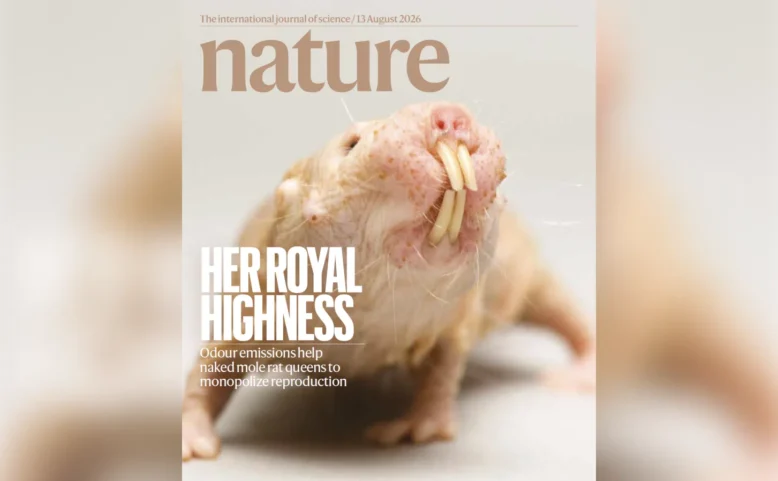
A recent study published in *Nature* reveals one of the secrets behind this remarkable organization: a molecule that acts as a queen pheromone. Isopropyl myristate, produced in large quantities by the queen, is detected by the sense of smell of other colony members. It helps keep the females in a non-reproductive state and limits dominance struggles.
When a queen disappears, this balance eventually breaks down: the females begin to compete and may fight violently until one of them becomes the new queen. In the study, adding the pheromone after the queen was removed delayed both the resumption of reproduction and the succession struggles. When the treatment was stopped, competition resumed and a new queen eventually emerged.
Among the authors of this study, conducted by a team at the Max Delbrück Center in Berlin, Felipe Cybis Pereira and Sophie Pezet, from the Physics for Medicine Paris laboratory at ESPCI Paris – PSL, investigated the brain’s response to this pheromone using functional ultrasound imaging. Their work shows that this odor activates specific regions of the brain, thereby shedding new light on its functioning in a species that has yet to be extensively studied using brain imaging.
This discovery opens up new avenues of research that extend far beyond the social organization of the naked mole-rat. This extraordinary animal has become a valuable model for understanding biological mechanisms as diverse as aging, resistance to oxygen deprivation, and certain cancers. Unraveling how its brain, hormones, and social environment interact could thus shed light on fundamental mechanisms of mammalian physiology and, in the longer term, inspire new avenues of research in human health.
 Published on 08/09/2026
 Research