Workers, exploiters, accumulators: Dopamine shapes social organization

How do social roles emerge within a group when its members are nearly identical? This is the question posed by a study recently published in the journal Nature [1], which was conducted on mice in a semi-natural environment where food is obtained by pressing a lever. Within a few hours, small groups of three individuals develop a distinct division of labor: some become “producers,” triggering access to food; others become “exploiters,” who primarily benefit from the actions of a fellow mouse; and still others become “accumulators”—a more balanced group—who collect resources at a later stage. However, there is no evidence that these roles are predetermined in each individual. They are shaped through interactions.
To understand this mechanism, the researchers combined continuous behavioral monitoring, real-time recordings of dopaminergic neuron activity, optogenetic and chemogenetic manipulations, and a reinforcement learning model. Their key finding boils down to a single parameter: the trade-off between exploration and exploitation. Should one continue to test multiple options, or instead focus on the strategy that already seems profitable? This parameter acts as a slider that gradually guides individual trajectories within the group.
Beyond a certain threshold, competition alone is enough to disrupt the group’s symmetry. An individual who happens to be the first to access the resource then enters a reinforcing loop and tends to become an exploiter, while another shifts toward production. As in a game played at a very fast pace, the early moves have a major impact on what follows. The study also reveals strong sexual dimorphism: groups of males organize themselves more around competition and the division of labor, while groups of females more often converge toward uniformity and cooperation. But these are not two opposing natures; rather, they are two distinct dynamic regimes.
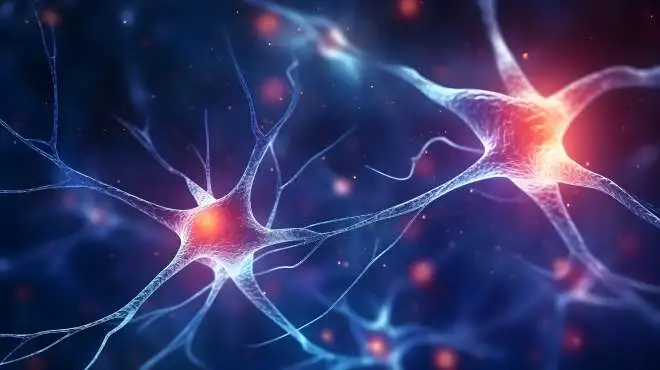
Dopamine appears to be the biological mechanism that modulates the balance between exploration and exploitation. In the ventral tegmental area, its rapid activity reflects the role adopted: in explorers, it responds to their own actions; in exploiters, it is triggered by the actions of others. Even more striking is that altering this activity even before social interactions occur is enough to transform the group’s structure: reducing specialization among males, or inducing it among females. A change in the group can also be enough to cause a role change. The social role is therefore not a stable trait: it is a dynamic position within a collective system.
Notes
[1] Du Laboratoire Plasticité du Cerveau (CNRS / ESPCI Paris – PSL), en collaboration avec l’ISIR (Sorbonne Université / CNRS / Inserm).
References
Solié, C., Nicolson, A., Justo, R. et al. Dopaminergic mechanisms of dynamical social specialization. Nature (2026).
https://doi.org/10.1038/s41586-026-10301-4
 Published on 07/04/2026
 Research
 Philippe Faure, coauteur de l’étude : philippe.faure@espci.fr
 Paul Turpault, communication scientifique : paul.turpault@espci.fr